What is Responsive Product
Portfolio Management (RPPM)?
Responsive Product Portfolio Management (RPPM) is a modern Strategic Portfolio Management (SPM) framework that helps organizations evaluate, allocate, and deliver product investment options, then adjust responsively based on outcomes.
Unlike traditional SPM, RPPM is built on Agile principles, enabling iterative planning across multiple time horizons and organizational levels. This allows product leaders to prioritize initiatives more dynamically and reallocate resources as conditions change.
RPPM helps organizations shift from an output-focused to an outcome-focused approach, enabling strategic agility needed to thrive in fast-changing environments.
What are the key principles of Responsive Product Portfolio Management?
Every organization, even with only one product, needs to take a portfolio approach in evaluating and creating products. Here are the 5 principles in Responsive PPM.
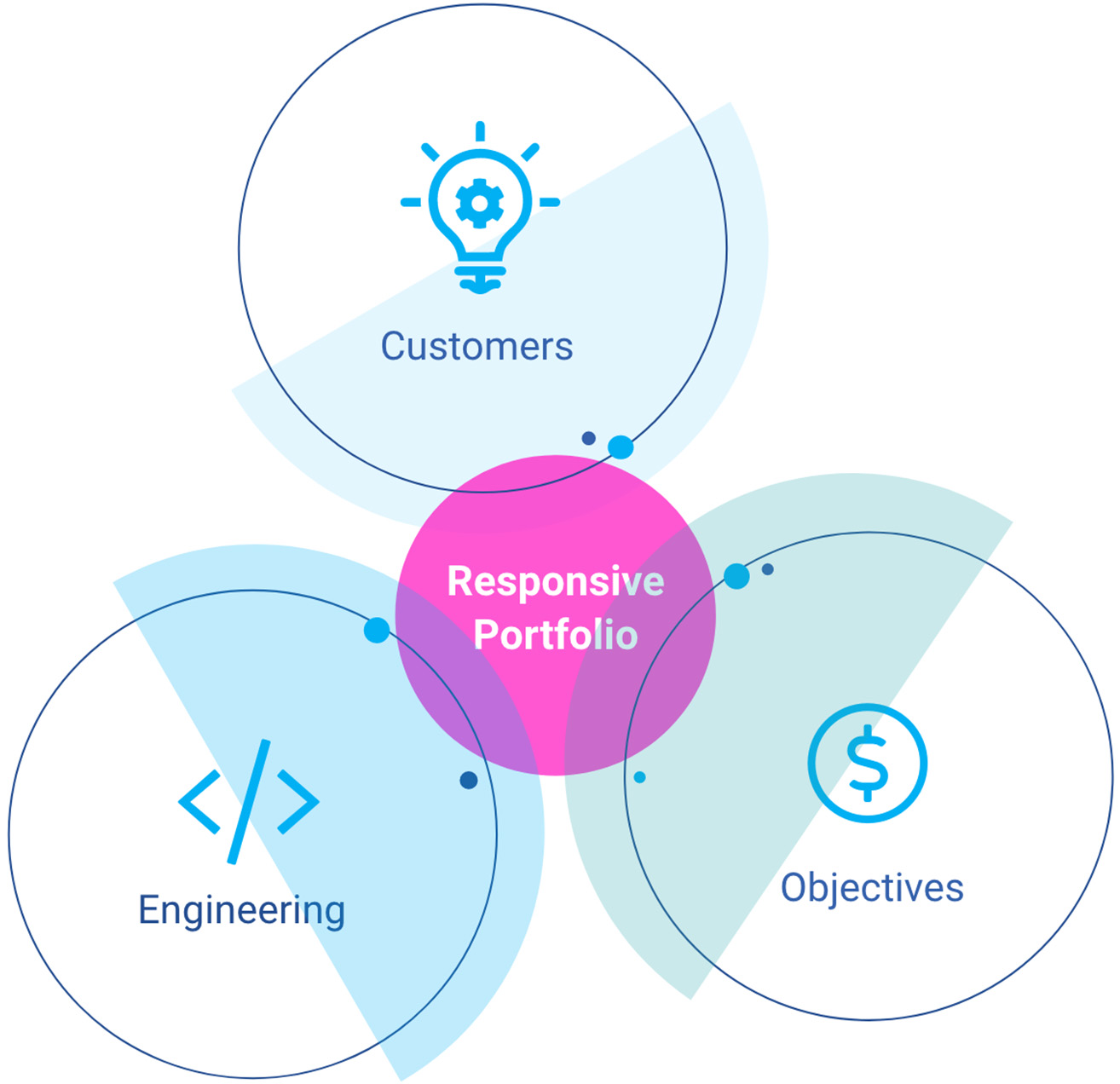
Multidimensional Portfolio
A product portfolio may be viewed and assessed in multiple dimensions.
The customer dimension reflects the type of customers the product serves, e.g. New, Existing, Enterprise, SMB, or North America, EU, LATAM
The objective dimension reflects the variety of goals the product desires to achieve, e.g. grow new customers, retain existing customers, innovation, etc.
The engineering or delivery dimension represents the solution options or resource requirements.
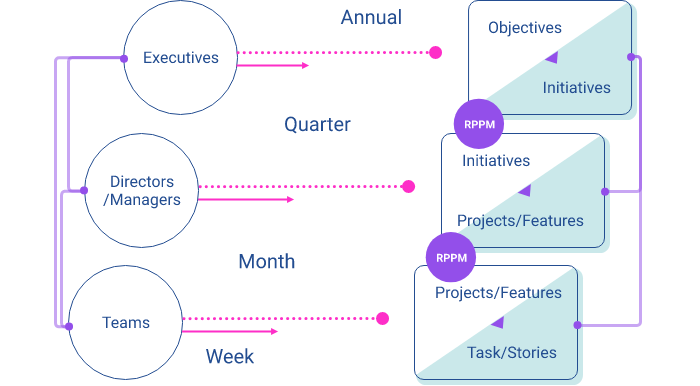
Three Operating Horizons
Every organization has long term, mid term and near term focuses and corresponding activities, led by the respective levels of organization.
The operating rhythm like annual planning, quarterly planning and sprint planning ensues.
Responsive PPM connects the rolling time horizons across all levels to enable strategic alignment and operational autonomy between levels.
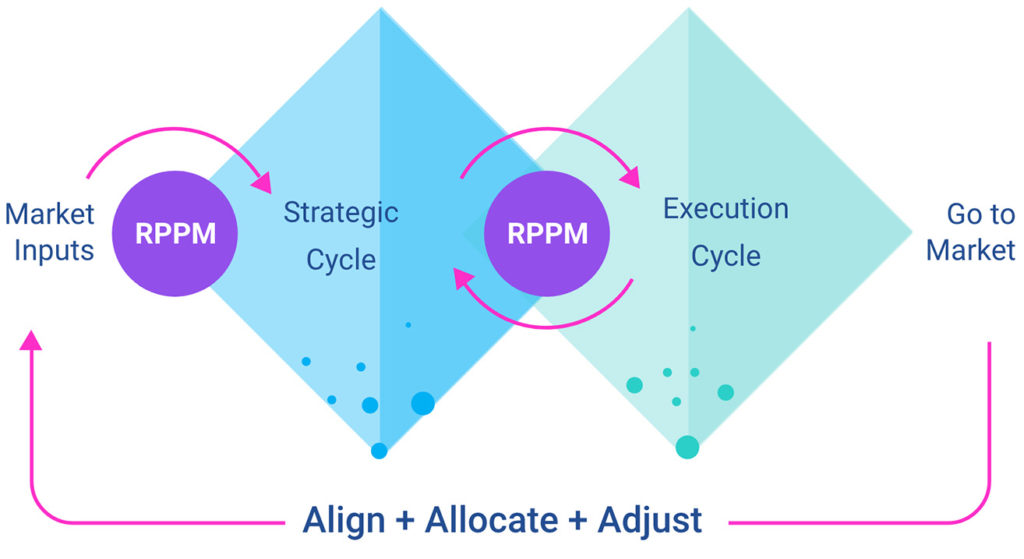
Double Diamond Strategy and Execution
The responsive portfolio management process has two distinct and interconnected phases at each organizational level: Strategic Cycle and Execution Cycle.
They correspond to the Discovery and Delivery cycles in building products.
Each cycle focuses on a different time horizon at the same operating level. For example at the executive level, there is an annual strategic horizon, and a quarterly execution focus.
The Strategic Cycle focuses on aligning on goals, defining strategies, evaluating opportunities, and assessing resource allocation. The outputs of the Strategic Cycle provides the guidepost for the execution cycle to iteratively deliver, measure, and adjust.
MoAR Prioritization
Outcome driven product leaders define relevant goals and metrics responsively based on the state of the organization.
They need a more direct measure of cost vs. benefit than ROI to evaluate product opportunities.
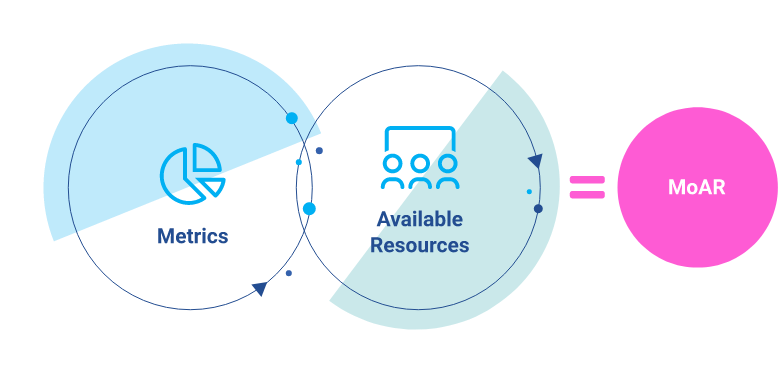
So that they can prioritize and allocate product investment to best “move the needle” of these metrics given available engineering resources that are usually not fungible.
Metrics on Available Resources (MoAR) model allows teams to connect benefits (return) directly to the goals the product initiative is connected with.
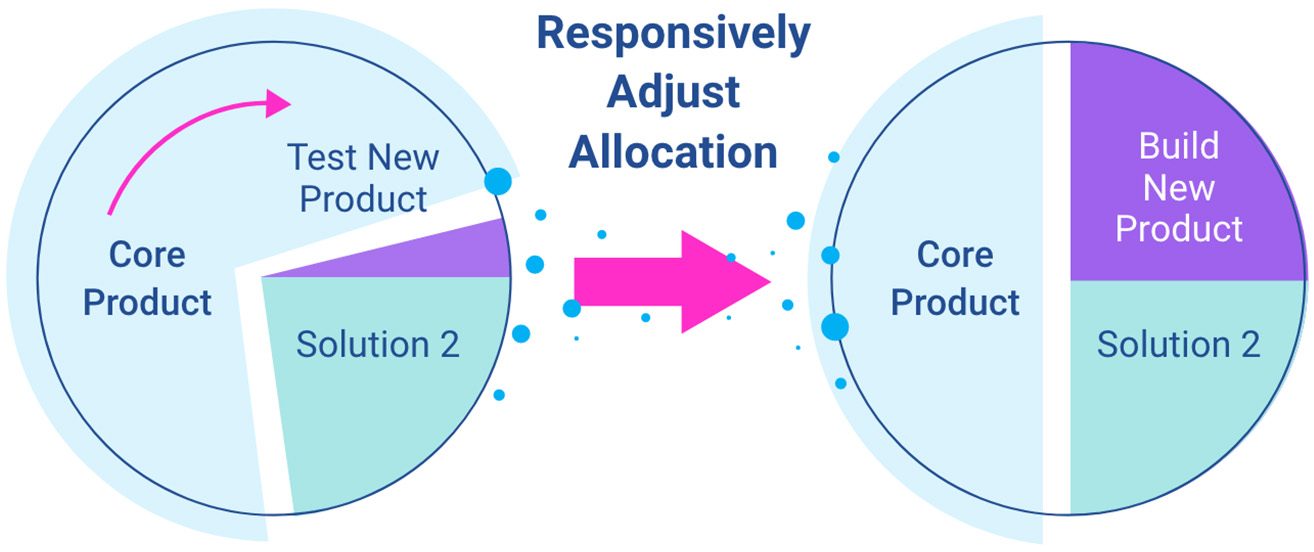
Responsive Re/Allocation
Traditional project portfolio allocates budget to projects. Responsive product portfolio allocates multi-dimensionally e.g. towards objectives, customer segments. This provides autonomy in the execution cycle to empower innovation and faster decisions.
Once the desired outcome has been achieved, responsive adjustment takes place to re-allocate towards the most impactful areas of a portfolio dimension.
RPPM helps Product managers to become Strategic product managers, Product operations to become Strategic operations, and product executives to lead their teams towards better outcomes faster.
Download this white paper to dive deeper into the principles of responsive product portfolio management and how to bring it to your organizations to accelerate your growth.